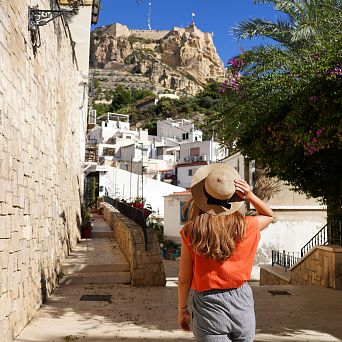
Alicante Bonfires 2026: An Experience You Simply Have to Live
June arrives once again bringing excitement, gunpowder, music and fire. And in the province of Alicante, that can only mean one thing: the eagerly awaited Alicante Bonfires (Hogueras de San Juan in Spanish) are back. This spectacular festival marks the official start of summer and transforms the city’s streets and beaches into a truly unforgettable celebration.
When Are the Alicante Bonfires 2026?
The Bonfires of Saint John (Fogueres de Sant Joan in Valencian language) are Alicante’s most important festival. Recognised as an International Tourist Interest Festival, they officially take place from 20 to 24 June.
Throughout the celebrations, Alicante’s streets tremble daily with the thunderous sound and excitement of the mascletà, a pyrotechnic display held every day at 2:00 pm in Luceros Square.
The city comes alive with emotion as it is completely transformed by its main events. On 20 June, the Plantà takes place, when all the monuments are fully assembled and Alicante becomes an open-air museum of ephemeral art. On 20 and 21 June, the Flower Offering is held, one of the most solemn and moving events of the festival. Thousands of participants dressed in traditional costumes parade through the city to create a magnificent floral tapestry dedicated to the Virgin of El Remedio. On 23 June, Saint John’s Eve, the celebrations reach their peak with parades, live music and festivities in the barracas and racós across every neighbourhood.
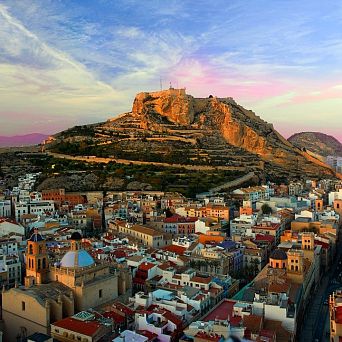
Finally, the most anticipated moment arrives at midnight on 24 June, when the famous Palmera is launched from Santa Bárbara Castle. More than a thousand rockets illuminate the entire city in a dazzling display. This marks the beginning of the Cremà, when the bonfires are set alight simultaneously throughout Alicante. It is a moment that is difficult to describe: emotion, fire, noise and silence all at once.
After the main festivities, from 25 to 29 June, the spectacle continues on Postiguet Beach with the International Fireworks Competition.
How many bonfires are there in Alicante?
The Alicante Bonfires 2026 return in full force across the city’s districts. This year, the festival includes 92 official commissions, presenting a total of 184 monuments in both adult and children’s categories. Added to these are the two official bonfires (adult and children’s), which take pride of place in Town Hall Square.
Each Alicante neighbourhood beats to the rhythm of its own bonfire, reflecting its unique identity and particular way of celebrating. While many commissions retain a small, family-oriented atmosphere, the districts competing in the prestigious Special Category go all out, creating monuments of remarkable scale, artistic design and social commentary.
What Is the History of the Alicante Bonfires?
The origins of the Bonfires can be traced back to ancient summer solstice celebrations, when fires were lit as symbols of renewal and the beginning of a new cycle.
The modern festival was founded in 1928 thanks to José María Py, a Spanish painter and sculptor who transformed this popular tradition into an organised celebration inspired by Valencia’s Fallas, yet with a distinct identity of its own.
Since then, fire has come to symbolise something deeply Alicantine: what is built with passion is also bid farewell to with emotion.
Traditional Food During the Bonfires
The Bonfires are also celebrated around the table, as Alicante’s gastronomy forms an essential part of the festivities.
Where to Stay to Experience the Alicante Bonfires?
During the Bonfires, Alicante welcomes thousands of visitors, meaning accommodation in the city centre fills up very quickly.
An excellent alternative is Hotel Servigroup Montíboli, located in Villajoyosa, just a few kilometres from Alicante. Perched on a cliff overlooking the Mediterranean, this five-star hotel offers a completely different experience: tranquillity, privacy and spectacular sea views.
Curious Facts About the Alicante Bonfires
The Alicante Bonfires are full of traditions and unique details. Every year, dozens of monuments are erected across the city, many of them featuring satirical and critical commentary on current affairs.
One of the best-known traditions is the Ninot Indultat, a figure that is spared from the flames thanks to a public vote and subsequently becomes part of the Bonfires Museum.
Another important figure is the Bellea del Foc (Beauty of Fire), the festival’s highest representative, chosen each year from among candidates nominated by the various commissions.
Alicante Bonfires 2026
For a few days, life moves entirely outdoors and the streets become everyone’s living room. It is wonderful to see families gathering to eat in the middle of the road, children playing around the monuments, and neighbours defending their bonfire with a sense of pride and passion that resembles football supporters cheering on their team.
And when the smoke finally clears, the streets fall silent and the scent of gunpowder lingers in the air, you realise that the most beautiful part was never the cardboard monument itself, but the people gathered around it.
Frequently Asked Questions
Is 24 June really the most important day?
Without a doubt. It is the grand finale of the festival. Everything culminates around midnight, when the sky lights up with the spectacular white Palmera launched from Mount Benacantil. At that precise moment, the Cremà begins the most emotional part of the celebrations, when fire takes centre stage.
How do the Bonfires differ from the Fallas?
It is true that both festivals share a love of satirical monuments, fireworks and fire, but the Bonfires possess a uniquely Alicantine spirit. They are intrinsically linked to Saint John’s Night and the arrival of summer. Alicante also has its own distinctive traditions, including the iconic Palmera fireworks display, the beloved Banyà and an unmistakable maritime atmosphere.
Does it cost money to enjoy the festival?
Many activities are completely free, including viewing the monuments, watching the parades, enjoying the Palmera and witnessing the Cremà. However, access to some barracas and racós (the festival venues organised by each neighbourhood) may require an entrance ticket or invitation. It is advisable to check official channels in advance when planning your visit.
Is it a good idea to drive around Alicante during the festival?
It is possible, but driving into the city centre is not recommended. During the Bonfires there are numerous road closures, diversions and heavy crowds. The best option is to park outside the busiest areas and continue on foot or use the TRAM network.